Hawaii Plans to Regulate Lootboxes

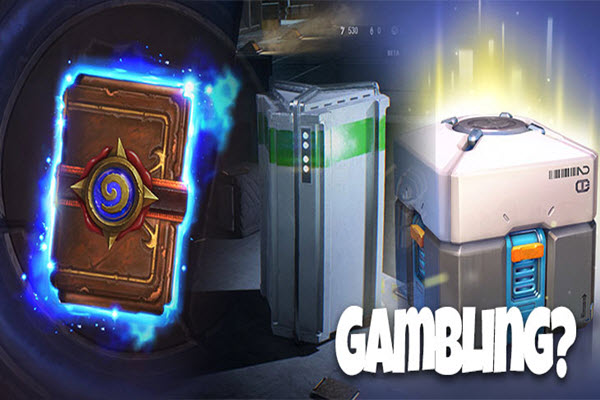
If there is one good thing to come from Star Wars Battlefront 2, it is that people around the world being more aware of loot boxes. In regards to a past article, EA (Electronic Arts) faces heavy scrutiny from gamers and government officials regarding the loot box system in Star Wars. Buying loot boxes gave unfair advantages to players in competitive multiplayer and were the best option to unlocking all of the content in the game. Hawaii was very critical against EA and video game companies pushing loot boxes in their games as they viewed it as a form of gambling towards children. Now Hawaii lawmakers are trying to push new bills to regulate loot box purchases.

Chris Lee of Oahu

One pair of bills, House Bill 2686 and Senate Bill 3024, would prohibit people under the age of 21 purchasing any games with randomized rewards using real money. House Bill 2727 and Senate Bill 3025, would require video game companies to label games with randomized purchases and the probability of loot box rewards. State Rep. Chris Lee of Oahu, who spearheaded the bills, stated “I’ve watched firsthand the evolution of the industry from one that seeks to create new things to one that’s begun to exploit people, especially children, to maximize profit.”

While games like Overwatch make earning loot boxes plausible and only offer cosmetics, some are providing advantages in game which encourages people to buy in order to win. Lee stated because the games are only rated T, the games promote gambling at a young age on virtual goods. Despite the backlash, Star Wars Battlefront 2 sold well but not as good as EA had hoped. EA was hoping to make more based on micro-transaction but based on the backlash, had to remove them.

Micro-transaction and in-app purchases are common among video games, including games for younger audience such as Minecraft and smart phone games. GDC (Games Developer Conferences) stated that 1/10 upcoming games would have loot boxes in some manner. One anonymous GameStop employee is wary that the law could lower the cost of sales based on the labels.

Image result for loot boxesMicro-transactions are a huge profit for video game companies. Activision Blizzard made over $4 billion on loot boxes alone in 2017. Often, companies use micro-transactions to earn higher profit margins rather than relying on sales alone. Gamers throughout the world have complained about the system and “games as a service” that has become more prevalent. Whether the law passes will force the industry to change a huge part of sales and potentially shake up the practices.

Sources:

Hawaii Tribute

Rolling Stones – GDC

PC Gamer – Blizzard makes $4 billion

Nintendo Coins reworks allows you buy Switch Games

If you’ve been buying new Nintendo games, you probably noticed a slip that allowed you to register games on the My Nintendo website to earn gold coins. Previously, gold coins could be used to purchase Wii U or 3DS indie games for about 80-90 points but the rework in early March will allow you to buy Switch games. Buying digital games will earn you 5% of the original price while physical will earn you 1%. The percentage lower for physical is to encourage people to buy digital as it gives a larger profit margin to Nintendo.

Nintendo hasn’t determined how many gold coins will be needed for purchases for DLC, full games, or even indies yet. The points expire after 12 months so if you’ve been saving them, remember to check your point total.

Sources:

My Nintendo

The Power from Fan Feedback {Project OCTOPATH TRAVELER}

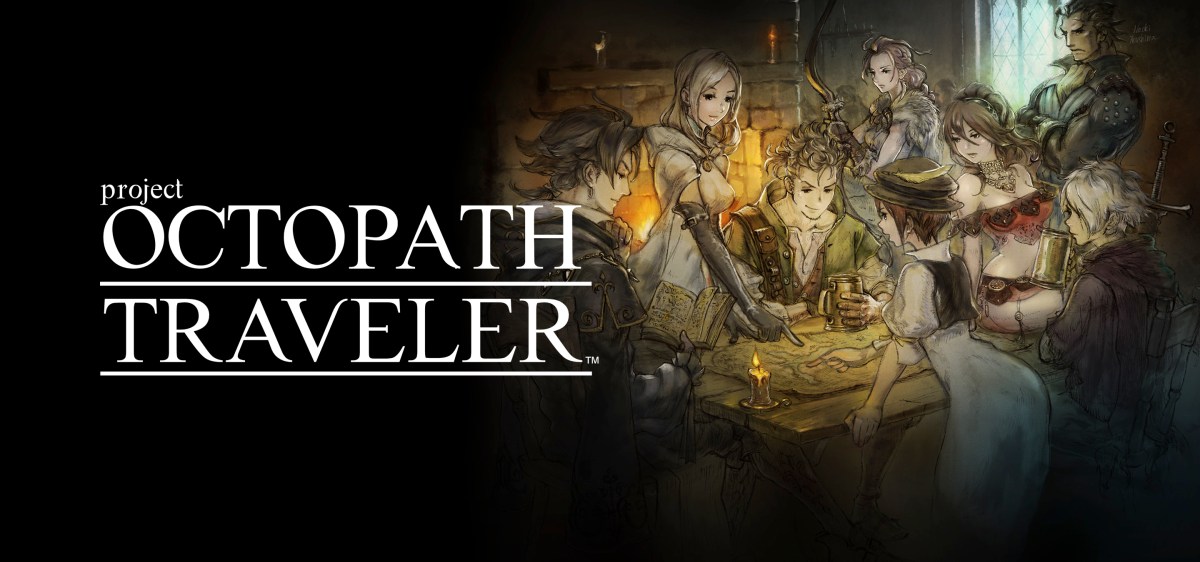
Project Octopath Traveler is a upcoming 2018 JRPG from Square-Enix for the Nintendo Switch. The game had a downloadable demo where they could gather fan feedback for the game. The feedback was used to improve the game. Fans were able to convince the developers to improve the UI, movement around the map, visuals, and motivate them to improve the game even more. More details in video below.

Recently, Nioh was another previous Japanese game title that also took fan feedback to improve the game and how fans felt about the overall game. The power of fan feedback can have huge effects and will greatly effect how video game development changes in the future. Depending on the success of Octopath Traveler, future JRPG or games could have more feedback demos. Even Star Wars Battlefront 2‘s beta helped induce changes before the release (clearly not enough before the game’s release). Although developers want to appeal to their fans as much as possible, they will not able to please everybody. For Nioh, developers become stress about trying to please every fan. “The first problem we encountered after researching feedback was that many members of our team became too influenced and affected by the opinions of the players,” Team Ninja’s Fumihiko Yasuda writes. “By attempting to consider all of those opinions, we were not arriving at solid solutions, but rather creating more questions” said Yasuda.

Nioh Americas Survey Results
Opinion on Nioh. First Beta

Fan feedback can create a good fanbase prior to the game release. Nioh did extremely well for a new IP from Ninja Theory with a 8.5 Metacritic rating. For a new game, developers can build a large interest by taking fan feedback. For a new IP, Square-Enix is taking steps to continue to push new classic JRPGs. Jairus Cambe stated that he is “excited for this since it’s an homage to the old school JRPGs presented in a beautiful way.”

Sources:

Endgadget

EGM Now


Do Let’s Plays ruin Video games?

Amy Hennig is a video game director and script writer. She is famous for her work at Naughty Dog and writing the story for Legacy of Kain and the Uncharted series. A veteran in the gaming industry, she spoke up about the price of creating video games and how video playthroughs of games ruin sales for the creators and justify microtransactions.

Image result for amy hennig

Video games need to contain enough content to warrant consumers to pay the $60 price tag. Now more than ever, micro payments such as loot boxes and DLC are customary with every game purchase. Consumers often complain that the inclusion of microtransactions are ruining the gaming industry and that video games have become more of a service. To experience the full content of a game or play online, you’re often forced to pay for additional content that many believe should already be included. Hennig states the reasons games as a service have become the standard is because the price of creating video games have risen. She defended the popularity of loot boxes because creation cost have increased but the price of games have not. The budget continues to grow to create bigger and better games but it comes with the price of trying to earn a profit via game sales. The demand for better games have increased as amazing and beautiful games such as Horizon Zero Dawn, Assassin’s Creed Origin, The Last of Us, and Legend of Zelda: Breath of the Wild have shown single player focused games can still be amazing. However, Single player games have an even difficult time because the replay value isn’t as strong to more audiences in comparison to games with multiplayer aspects. This has led to more video games to come with DLC, season passes, multiplayer, and micro-transactions.

Visceral Games Star Wars project - Imperial-occupied town from early in-game footage
The single player Star Wars game by Visceral – Studio was close by EA for linear based only games

Hennig also stated that the popularity of Let’s plays and video game playthroughs have ruined the sales of Single Player games. People can watch entire games stories or gameplay on YouTube or Twitch through other players. She believes the rising popularity of online media will continue to drop games sales and force companies to find alternative forms on sales such as loot boxes.

Let’s Plays have become a major form of media. Popular online personalities have started gaming channels and play through the entire series. This can introduce potential consumers to buy the game. Now, YouTube and Twitch link to stores where you can buy the games when watching online playthroughs. Videos are seen as indirect marketing and one of the biggest platform that can reach an audience without heavy cost. Some introduce a game that people would never have bought until they saw content creators make playthroughs.  However, there can be an argument on whether it is worth to pay $60 for a single player only game. Video games have become a luxury for some and lack of side content in a story or additional modes of gameplay leads to lower sales. This justifies the addition of microtransaction to make up for the profit lost when games eventually price drop. It really depends on the individual.

What do you think about what Amy Hennig said? Do you agree or do you disagree?

Polygon

WccfTech

Reset Era